Linen Creases. That Is Not a Flaw.
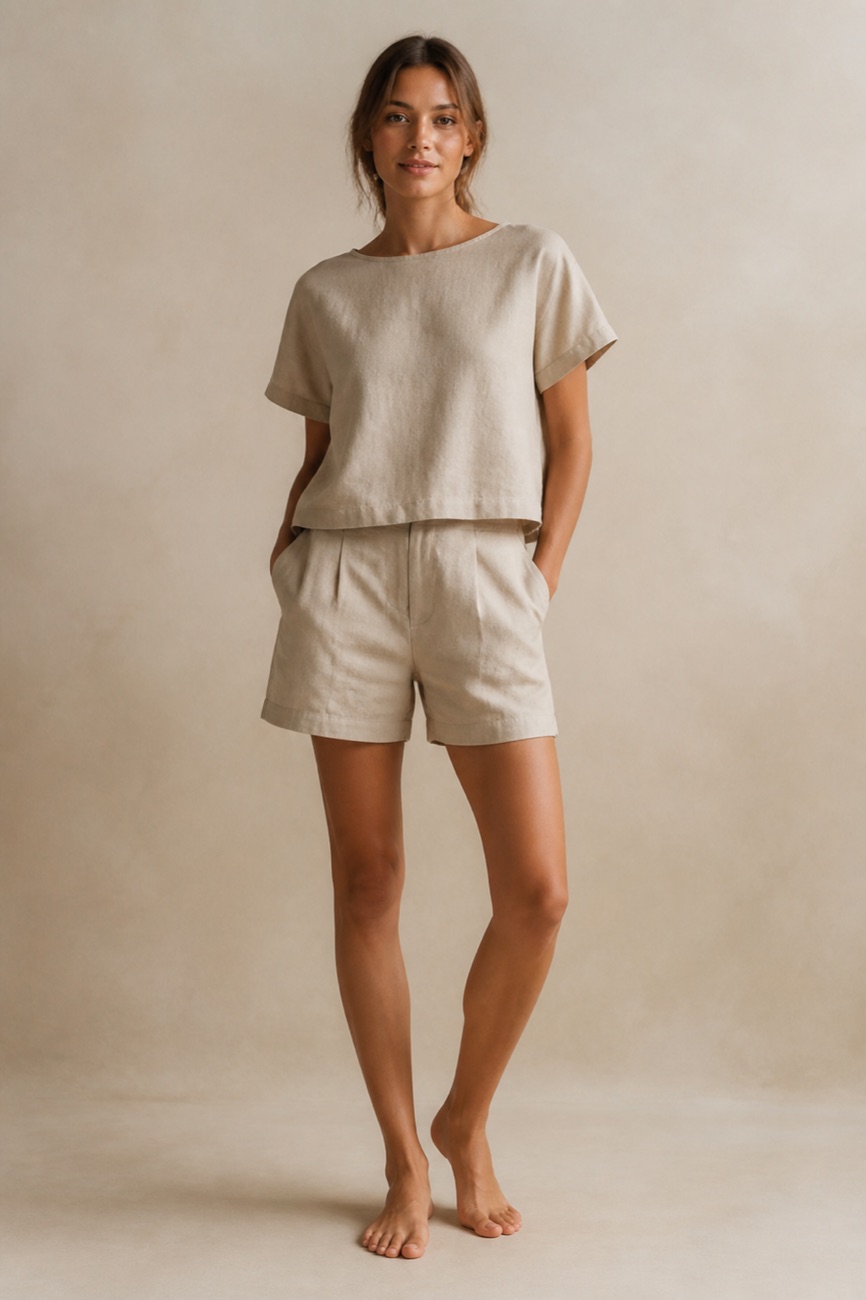
Every summer we get the same question: why does linen crease so easily?
Why it creases
Linen fibre is highly crystalline and has almost no elastic recovery. Fold it and it stays folded. That is the same property that makes it cool, crisp and breathable — you do not get one without the other.
Choosing it
Pure linen is the coolest and the most creased. Linen–cotton is softer with shallower wrinkles. Linen–viscose, like the 70/30 we use often, drapes better and creases least, at a small cost in breathability. Pick the trade-off you prefer.
What the weight tells you
Under 150 gsm is sheer, good for overshirts. 165–200 gsm is the usual range for shirts and dresses. Above 220 gsm suits trousers and outerwear — better drape, a little warm for high summer.
Washing
- Cold water, 30°C or below, gentle cycle or by hand
- Avoid enzyme-heavy detergents, which accelerate fibre breakdown
- Keep the spin under 400 rpm — over-spinning makes creasing worse
- Smooth it flat by hand while damp and dry in the shade; most creases fall out
- If you iron, use medium heat with steam, on the reverse
It improves
Linen is one of the few fabrics that genuinely gets better with washing. After about five cycles it is noticeably softer and the sheen turns warmer. If it feels a bit stiff on day one, that is expected.